

Walking alongside community
Spotlight on
25 June 2026
For more than 40 years, Southern Aboriginal Corporation has been walking alongside Aboriginal communities across the southern Noongar region of Western Australia, growing its services in step with what community needs.
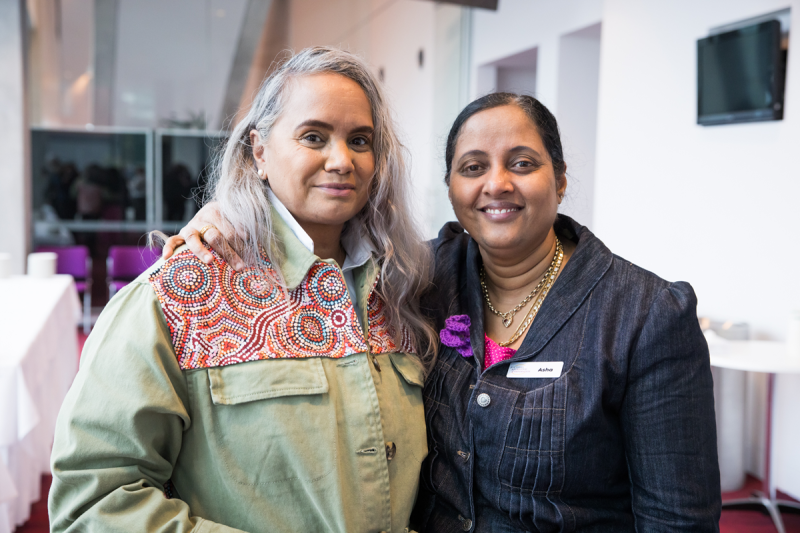
Asha Bhat and Geraldine Martin
Growing with community needs
What started in 1983 as a small, community led organisation has grown into a strong Aboriginal Community Controlled Organisation, with offices in Albany, Katanning, Bunbury and Narrogin, delivering services across 17 communities throughout the Great Southern, Southwest and Wheatbelt.
More recently, the organisation has extended some service delivery into Perth, while remaining firmly grounded in its core focus on the southern Noongar region.
The way they talk about their work is simple. They listen first. Then they respond.
That approach has shaped the organisation’s growth over time. Today, Southern Aboriginal Corporation delivers a broad range of programs including Community Housing, Tenancy and Homelessness Support Services, Social and Emotional Wellbeing programs, and the Family Violence Prevention Legal Service.

Adrian Hardy at the 2025 NAIDOC Ball
Listen first, then respond
For CEO Asha Bhat, leadership begins with respect and accountability.
‘My role is to support what community is asking for and to ensure the organisation stays strong, sustainable and responsive,’ Asha says. ‘This is an Aboriginal Community Controlled Organisation, so the direction must always come from community voice and cultural leadership.’
To enable this, Southern Aboriginal Corporation keeps open communication with the community. Steering groups allow formal ways to engage with the corporation, while there are always catch-ups and yarns happening throughout the week.
‘Listening to community is built into how we operate every day,’ Asha explains. ‘Our Board represents the regions we serve, so community voice is part of our governance and decision-making.’
‘We also have Elders steering groups across different programs, which provide on-the-ground guidance and feedback to make sure our services are culturally appropriate and meeting real community needs.
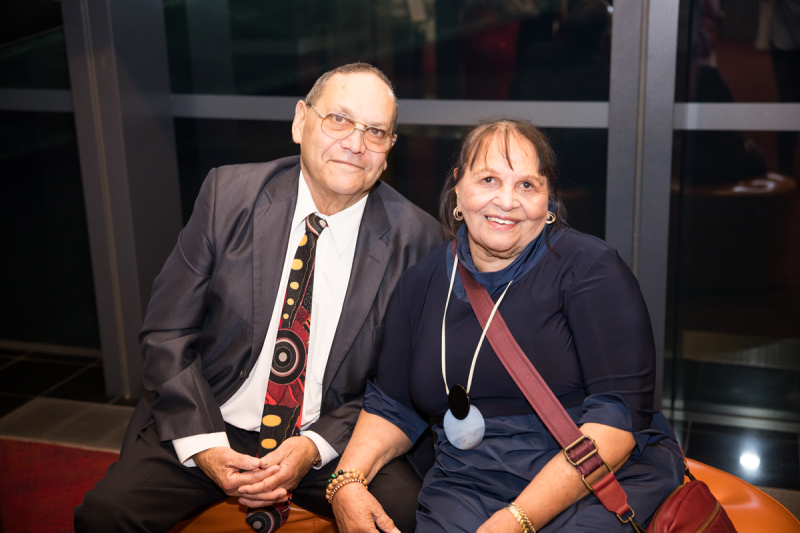
Dallas Coyne Snr and Dianne Coyne at the 2025 NAIDOC Ball
‘Our staff are constantly yarning with clients, families and Elders, and that feedback directly shapes how we design and adapt our programs.
‘We also invest in cultural awareness and trauma informed training so our staff and partners are equipped to engage in the right way, with respect and understanding,’ Asha adds.
Evolving while expanding
Although the corporation has grown in size and services, the key to how it thrives remains the same: it’s about maintaining strong relationships with community.
Deputy CEO Oscar Colbung says the corporation’s evolution is supported by this strong foundation. But there has still been a lot of learning and improving the systems of recording and then using the community’s input.
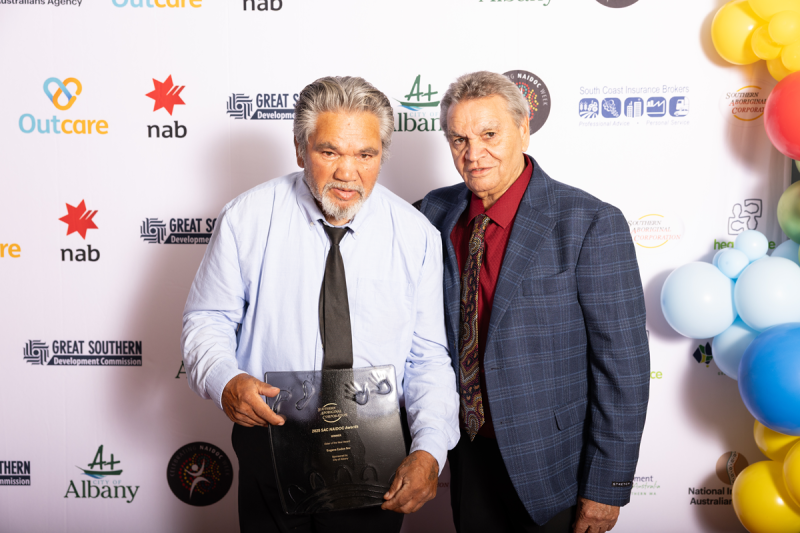
Oscar Colbung (right) with Eugene Eades Snr, Elder of the Year at the 2025 NAIDOC Ball
‘Our approach has definitely evolved as we have grown, but the core has stayed the same. It has always been about relationships and sitting down for a yarn,’ Oscar says.
‘What has changed is how we capture and share that feedback across the organisation so we can respond more consistently across regions and programs. It is ongoing work. We continue to improve how we interact with community and make sure we are listening properly and responding in a way that reflects what our people are telling us.’
This has led to the corporation getting a fuller picture of people’s needs, enabling the team to adjust programs and services to support community health and wellbeing.
Housing meets holistic care
Through its Community Housing program, the organisation manages around 80 homes, while Tenancy and Homelessness Support Services help people find and maintain safe, stable housing.
But as the team knows, housing is only one part of a bigger picture. The strength of the organisation lies in understanding the full story behind each person.
‘Our people don’t come with just one challenge,’ Oscar says. ‘There might be housing issues, but there is also family, wellbeing and connection to culture. We take the time to understand that and respond in a way that feels right for them.’
This thinking sits behind their wraparound model of care. Alongside housing, the organisation delivers Family Dispute Resolution, Driver Licensing Support, Youth Programs, Employment and Justice reintegration pathways, and Aboriginal Ranger programs, all designed to support independence, connection and long-term wellbeing.
Their Family Violence Prevention Legal Service is one of the most critical programs, providing legal and non-legal support to Aboriginal people experiencing family violence. It is not just about legal outcomes, but about safety, dignity and walking alongside people through difficult times.
Culture stays at the centre
Across all programs, culture remains central.
‘As an Aboriginal organisation, culture guides everything we do,’ Oscar says. ‘It is about making sure people feel safe, understood and connected. That is what makes the difference.’
Behind the services is a team of around 60 staff members, many from the communities they serve. Their lived experience and cultural knowledge help build strong relationships and create a sense of safety for clients.
Leadership is also community-led. Governed by an Aboriginal board, the organisation ensures decisions are guided by cultural authority and accountability to community.
Growth has come from years of building trust and responding to need. As those needs evolve, Southern Aboriginal Corporation continues to expand its services thoughtfully, while staying grounded in its purpose and connection to the southern Noongar region.
For Asha, the focus is on enabling that growth in the right way.
‘We are here to support strong outcomes for community, and that means investing in Aboriginal people, strengthening our services and making sure we are always listening,’ she says.
The impact is seen every day in people finding housing stability, families accessing support during a crisis, and young people building confidence and connection.
‘This work is about our people and our future,’ Oscar says. ‘We walk together, and that is where real change happens.’