

Community-led decision-making in practice
Spotlight on
23 February 2026
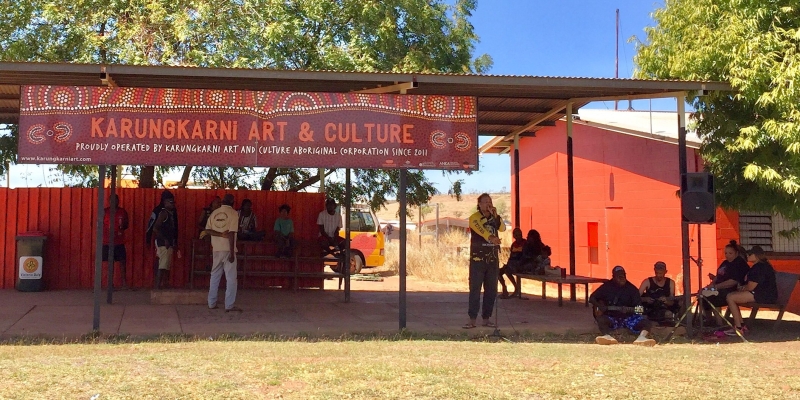
Katherine West Health Board Aboriginal Corporation (KWHB) delivers primary health care in one of the most complex service environments in Australia. It covers around 172,000 square kilometres stretching across the NT, including main health centres in Kalkaringi, Lajamanu, Timber Creek and Yarralin. Within this area are around 10 different language groups, with different cultures, landscapes, remoteness, experiences and expectations.
To achieve health outcomes while remaining community controlled, KWHB doesn’t use a single solution or standard model. Sinon Cooney, KWHB CEO, explains it’s about listening carefully and making sure the people who represent communities and families are accountable and the deciding force for the organisation.
He says the organisation’s strength comes from staying true to the principles of community control in everything it does. In many cases, they are the only accessible frontline health service. Giving the best service means being culturally responsive as well as high quality and safe. Local leaders are the best people to make the call.
‘My role is to deliver the organisation’s work under the direction set by our board, who are Aboriginal people elected by our communities. That means the priorities don’t come from me, and they don’t come from outside the region. They come from community, and our job is to turn those priorities into real action on the ground,’ Sinon says.
Reflecting Country in community leadership
The board at KWHB is of Aboriginal directors, elected by community members through a secret ballot process. This approach began after changes to the organisation’s constitution, to make sure people can vote freely and with confidence.
‘Our communities were really clear about what they wanted. They wanted their voices to be heard and valued, and they wanted leadership that genuinely represents them,’ explains Sinon.
‘We’ve worked hard over time, including through changes to our constitution, to make sure that’s exactly what happens. It’s important that people can vote based on how they feel and who they trust, not because of pressure or expectation.’
The directors are elected from across the region and across different community and cultural groups. Sinon explains that balance in age and experiences is important.
‘The board represents the whole community. Directors aren’t chosen because they’ve done formal courses or have professional backgrounds in management or finance – and that’s okay. That’s something we support them to build once they’re in the role.’
Supporting people into leadership roles
Some directors have served on other boards before, while others are taking on these responsibilities for the first time. KWHB has invested in supporting directors to grow into their roles in a way that makes sense for them.
Sinon says, ‘We’ve taken a really deliberate approach to supporting our directors. We work with a consultant who comes in 3 times a year for full-day sessions, and those sessions are about helping people understand their responsibilities, how decisions are made, how information flows, and how to ask the right questions.’
This support is not delivered in a generic way. Sinon explains everything is adapted.
‘There are different English literacy levels, experiences, language backgrounds and levels of confidence in a room. So we change how we do things depending on who’s there.’
Training is grounded in real examples from KWHB’s work to keep it relevant. Because, as Sinon says, if you ‘talk in examples that don’t relate to people’s lives, you lose them straight away. But when you use our own stories and situations, people can see exactly what it means and how it applies.’
Experienced directors, including the chair and deputy chair, also play a key role in supporting others.
‘When that learning comes from other Aboriginal people who are doing the role, it has a much stronger impact. It builds confidence and reinforces that leadership is something we do together,’ says Sinon
Directors also complete training delivered by ORIC, giving them ‘additional perspectives and reinforcing their responsibilities as leaders of an Aboriginal community controlled- organisation’.
Sinon is seeing a clear shift. ‘You can see people growing into the role. You see more confidence, stronger conversations and people really engaging with the information in front of them. It’s been really rewarding to watch that development happen.’
Keeping community voices front and centre
In a region this large and complex, maintaining strong connections between community, leadership and staff means making constant effort.
KWHB uses a range of approaches to keep information flowing both ways. In the lead-up to elections, staff spend time in community explaining how leadership roles work and what they involve.
‘A lot of people know us as a health service, but they don’t always know how decisions are made or what being on the board actually means,’ Sinon says.
‘We spend time talking through that so people can make informed choices.
‘At least once a year, we go out on Country and we ask what’s working, what’s not, and what needs to change. If it’s something big, it comes back through the board as a priority. If it’s something smaller, we deal with it straight away.’
Directors are also encouraged to raise issues as soon as they hear them.
‘We tell them not to wait for the next meeting if something needs attention. If it’s urgent, call us on the day. We don’t want problems sitting there and growing.’
The organisation has set clear contact points, which are promoted across the region on posters. Community members know who to speak to if they have concerns. Plus, all feedback is reported back to leadership, providing transparency about how issues are being handled.
Turning priorities into action
For KWHB, leadership is most meaningful when community priorities turn into real outcomes. Sinon explains one major focus recently has been Aboriginal workforce development. The board has led the development of a workforce strategy focused on training, employment and career pathways for Aboriginal people.
‘Our board made it very clear that this was a priority,’ says Sinon. ‘Our job was to work out how to make it happen.’
An accredited training skill set is now delivered on Country, in community. The course has national Accreditation with ASQA 11049NAT Course in Health Coaching for Aboriginal and Torres Strait Islander Peoples with Chronic Conditions.
‘We developed an accredited training skill set and deliver it on Country, in community, because that’s what the board asked for. As a result, we’ve nearly doubled the number of Aboriginal people employed at KWHB.’
Sinon adds that it’s not just a win for capacity at KWHB, but for better health outcomes for the community too, which is something the organisation and the community all aim for.
‘Employment, education and income are social determinants of health,’ says Sinon. ‘Just by having people trained, employed and earning an income, we’re improving health outcomes before people even walk into a clinic.’
Walking the talk
Sinon explains one of the major keys to working well across such a vast and complex environment is consistently doing what you say you’ll do.
‘Walking your talk is critical in community control. There have been too many promises made to Aboriginal communities that never get delivered. Every time that happens, trust erodes,’ says Sinon.
He mentions a recent example of setting up community laundries. The board had reported that people were struggling because washing machines kept breaking down.
‘So we kept pushing, applying for grants and building relationships for 5 years until we secured $1 million to roll out laundries across the region,’ Sinon proudly reports.
‘When that funding came through, the board said, “How good is it that we asked for this and it actually happened?” That’s what shows people their voices are heard and taken seriously.
‘That’s what community control looks like in practice – listening, following through, and doing what you say you’ll do, even when it takes time.’