

ORIC projects
ORIC carries out projects that align with our vision of well-governed and self-determining Aboriginal and Torres Strait Islander corporations achieving their economic, social or cultural purposes.
Through this work, we strengthen existing, and develop new, collaborative partnerships and opportunities to support and regulate corporations.
Our projects allow us to focus on specific industry sectors or aspects of corporate governance.
Learn more about some of our projects below.
Current projects
Training package for remote community stores

Overview
We’re developing a practical, culturally appropriate governance training package to support directors of remote community stores. This work forms part of the 'Remote retail' pillar of the National strategy for food security in remote First Nations communities.
The project aims to strengthen the transparency, sustainability, and overall performance of community stores by building directors’ skills in decision‑making, financial oversight, risk management, and transparent operations.
Participants will also receive practical tools and templates to help monitor store performance and plan for emergencies.
Why this project matters
Remote community stores play a crucial role in ensuring access to affordable, nutritious food – and strong governance is essential to their financial sustainability and the wellbeing of the communities they serve.
By equipping directors with governance skills contextualised to remote store operations, the project supports:
- improved food security
- stronger decision‑making
- better financial management
- greater community confidence
- healthier outcomes for remote communities.
This work helps build capability within the remote retail sector and promotes accountable, community-led governance.
Activities
Workshop development
In 2025, ORIC began working with community store representatives, trainers, researchers, and subject-matter experts to co-design a program of training modules.
These modules will include a range of governance and food security topics, such as:
- the national code of practice
- food security
- laws and rules
- risk
- finance
- planning and performance.
Pilot and rollout
- The first pilot session is scheduled for March 2026.
- ORIC is seeking interest from stores or groups of stores for further pilot sessions.
- ORIC intends to schedule a series of workshops from July 2026.
Who is involved
- Community store directors
- Remote community store operators
- Training providers
- Governance experts
- Researchers and sector specialists
Timeline
- July 2025 to June 2026: co-design and development of modules
- July 2026 to June 2028: delivery and evaluation
Get involved
ORIC is seeking interest from community store directors to participate in training workshops.
You can:
- complete the online form, or
- contact training@oric.gov.au to book a phone‑based registration.
Please share the form with anyone involved in the governance or operation of remote community stores.
Expected outcomes
- strengthened governance capability across the remote community stores sector
- more transparent and sustainable store operations
- better oversight of financial performance and risk
- improved food security and health outcomes for remote communities
- practical ongoing support through a digital governance playbook
Completed projects
Governance stories
Overview
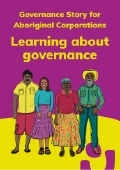
In May 2025, ORIC partnered with the Central Land Council (CLC) to release a series of governance story books designed to support learning, reflection and knowledge-sharing across Aboriginal and Torres Strait Islander corporations.
The books present key governance concepts in a clear, practical and culturally grounded way. Each story focuses on everyday corporate governance responsibilities and the skills needed to run strong, effective corporations.
Why this project mattered
Good governance underpins the strength, transparency and sustainability of Aboriginal and Torres Strait Islander corporations. By using stories – an important and accessible way of teaching and learning – this project supports corporations to:
- build shared understanding of governance concepts
- strengthen decision making and accountability
- support new and experienced directors in understanding their roles
- make governance learning more approachable, visual and culturally relevant.
The Central Land Council ensured the content reflects lived experience and community knowledge while maintaining practical relevance for corporations.
Objectives
- Develop a set of accessible, culturally informed governance storybooks.
- Support learning on core governance topics through visual and narrative-based teaching.
- Provide resources that corporations can use in training, inductions and community education.
Activities
ORIC supported the Central Land Council to develop and release a series of books that explore governance topics such as:
- running good meetings
- making decisions
- looking after money story
- keeping records
- planning for problems.
Each storybook is designed to be easy to read, easy to share and suitable for directors, members, staff and community audiences.
Who was involved
- Office of the Registrar of Indigenous Corporations (ORIC)
- Central Land Council (CLC)
- Governance educators and community contributors
- Aboriginal directors, members and local knowledge holders
Timeline
- June 2023: Directors of corporations at the CLC’s PBC camp expressed a need for governance information in their words
- June 2024 to May 2025: Governance storybooks developed and released
Outcomes
- A set of engaging, culturally grounded governance resources now available for corporations – browse through the books here.
- Practical tools for directors, members and staff to support good governance.
- Strengthened partnerships and shared approaches to governance education.
- Encouraging and inspiring other corporations and peak bodies to customise resources to suit their constituents to increase understanding of core governance topics.