

Boots on the ground: Dulabed and Malanbarra Yidinji builds leaders for Country
Spotlight on
19 October 2026
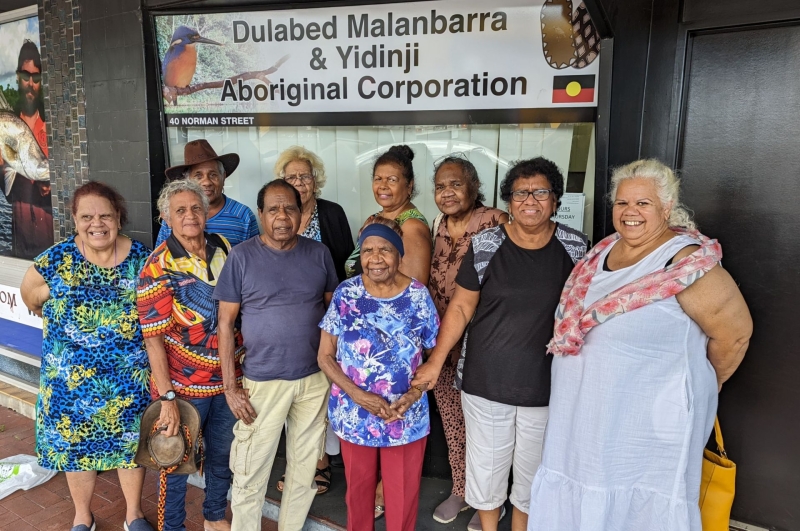
When the Dulabed and Malanbarra Yidinji People received their native title determination in 2009, they had to learn how to run a corporation almost overnight.
Focused on caring for Country and self-determination, Dulabed and Malanbarra Yidinji Aboriginal Corporation Registered Native Title Body Corporate (DMYAC) was formed following their native title determination in 2009. DMYAC spent its early years balancing its new corporate responsibilities with its cultural ones, always focusing on what mattered: caring for Country, self-determination, and supporting all generations to continue identity and culture.
Today, its Junior Ranger program in the wet tropics of far north Queensland is growing the region's next generation of leaders, and government agencies and schools are lining up to work alongside them.
For Executive Officer Jasmine Clubb, strong governance built on culture and family has been key to the organisation’s growth and goal-setting.
Getting the foundations right
Formalising its process for managing Country was an important step. ‘We were already managing Country, but had to get a strategic plan in place that showed people our guys are real, they’re looking to do business, and to do business properly.’
Funding eventually allowed the corporation to hire its first 2 staff: a part-time project manager and a part-time admin worker. Jasmine says the leadership from the board of directors, who had been part of the organisation’s beginning, helped shape the way the corporation would work.
‘They’re the ones from the claim process who actually led a lot of these programs, up until the initial ranger program,’ she says. ‘They’ve been on the boards, and we also have an Elders Advisory Committee that provides cultural guidance and direction to the board and to staff, so we’re making sure we’re doing things culturally appropriately and as per their wishes.’
Jasmine points out that leadership from the top has one of the biggest impacts on the organisation.
‘It’s been able to filter down to us as the next generation, and we’re able to carry on our old people’s aspirations for Country. It is now our responsibility as the next generation to pass that on to the juniors coming through, too.’
Rangers on Country
In 2021, DMYAC secured funding from the Queensland Indigenous Land and Sea Ranger program to establish a ranger program – something Jasmine says the corporation had sought for a long time.
‘Our Elders really wanted a ranger program to have boots on the ground, eyes and ears out there,’ she says. The program has run continuously since, with a further 3 years of funding locked in, covering land management activities including cultural heritage protection, pest and weed control and fire management.
That same model now extends to young people through the corporation’s Junior Ranger program. The program partners with Gordonvale State High School and is funded through the Reef Assist program. Two 16-year-old Traditional Owners work as school-based trainees, splitting their week between school and ranger duties while completing a Certificate II in conservation and ecosystem management.
‘They go to school 3 days and then come and work for us 2 days,’ Jasmine says. ‘It’s a lot of work due to the establishment of the program, but it’s turning out to be a great model.’
The program launched in August last year and has grown quickly on a single year of funding, with DMYAC now seeking further funding to expand it to other schools in the region.
‘We’re actively exploring further funding opportunities and getting everything lined up in the meantime, so we can continue the program and expand it to include other areas of interest to schools around our region,’ Jasmine says.
Growing the next generation
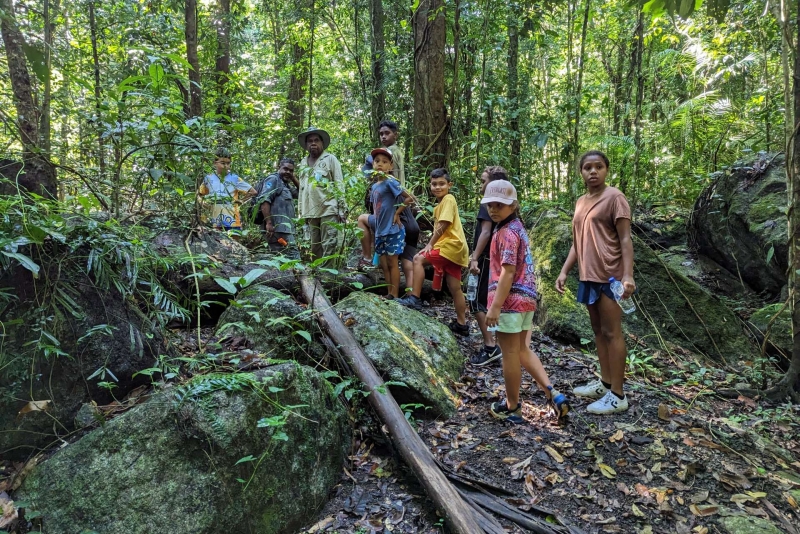
Beyond the 2 traineeships, the partnership with Gordonvale State High School and other schools within our area has grown to include:
- after-school language lessons
- interactive cultural activities
- crocodile safety presentations
- on country cultural days
- Creek clean activities
- a revegetation project involving a broader group of Year 10 students, who plant trees on Country and take part in a cultural camp at the end of the program.
For Jasmine, the clearest sign the program is working came through one of the young rangers.
One of our female rangers was really struggling to attend school, so we included a requirement in her employment contract that she attend at least 80% of her school days to continue her traineeship,’ she says. ‘Her attendance rate has just rocketed. She’s excelling at school through the traineeship, and we’re really proud of her’
It’s the kind of leadership pipeline Jasmine wants to see more of.
‘I think that’s how we can build good leaders within our mob and encourage them to start stepping up,’ she says. ‘If a Junior Ranger program can do that for one of our juniors, I think that’s where good governance comes into play – starting young and building something sustainable for our corporation and our Country into the future.’
A trusted partner
Now 5 years into the Ranger program, the rangers’ visibility has changed how other organisations engage with DMYAC, including through fee-for-service work.
‘We are reliable and others can see that. People are looking at us as equivalent to the other land management agencies,’ says Jasmine.
‘They see us out in community more, and it’s given us the opportunity to spread awareness, so people know these are the things you have to come and speak to us about.
As well as driving more enquiry and raising the corporation profile, the rangers have strengthened DMYAC’s own pride in their purpose to care for Country and people.
‘That sense of pride has really come out for our mob. It’s given us the confidence to speak strongly for Country. We can say to other agencies, this is our Country too, we’re not going to take a step back – and it’s okay to call things out if we don’t think things are right.’
Looking ahead, Jasmine wants that trust to keep opening doors for the next generation, whether they become rangers, board members or, eventually, executive officer.
‘I think it’s about empowering them, giving them the reins and having confidence in their abilities,’ she says. ‘It’s about giving them the space to develop their own leadership style and follow their own path. We’re not going to be here forever, so it’s our responsibility to make sure the next generation is ready to step up, lead and continue caring for Country.’