

Directors build their governance knowledge with Certificate IV qualification
Announcement
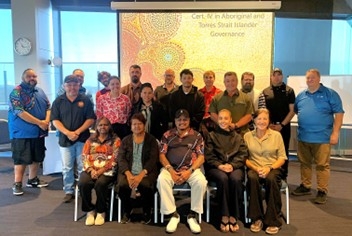
Students of the 2026 ORIC supported Certificate IV in Aboriginal and Torres Strait Islander Governance began their course this week in Sydney.
A full room of eager learners were welcomed to country by Dharawal and Dhurga man Uncle Lloyd Walker.
The 20 directors of Aboriginal and Torres Strait Islander corporations represent a competitive field of willing participants.
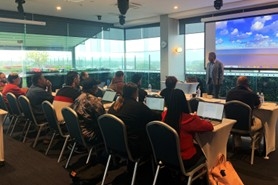
ORIC received more than 150 applications for this program that builds skills and knowledge to be a director in an Aboriginal and Torres Strait Islander corporation.
During this course, delivered by Absec Learning and Development Centre, the students will complete 12 units of competence, including:
- Participate as a board member
- Maintain and protect cultural values
- Lead difficult conversations.
Another important aspect of the course is working with the other students and learning about their corporations and communities.
Applicants had to meet eligibility criteria that included their status as a member director, whether they’ve been disqualified as an officer of a corporate entity, their history of training support, and participation in ORIC’s corporate governance workshops or an equivalent from another provider.
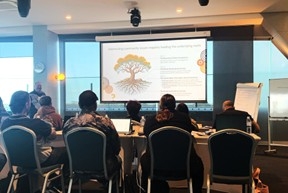
Written responses were also assessed to look at why the applicant was applying for the certificate, and how they were going to bring their learnings back to their corporation and community.
A shortlist was developed to ensure a range of corporations in a range of locations were included.
The 2026 cohort joins the course from all states and territories, except ACT and Victoria. The cohort includes 4 students from very remote areas and 7 from regional areas.
Applicants who missed out on an ORIC supported place can study directly with one of the registered training organisations (RTOs) delivering this qualification, which are listed on training.gov.au.
We look forward to supporting this cohort as they develop their skills, share knowledge, and lead positive change in their communities.